

Introduction
Surgery can be life-saving, but sometimes a surgical error occurs. When a surgical error causes harm, injured patients can pursue a surgical error claim in the USA under medical malpractice law. A surgery error claim (also called a surgical error lawsuit) involves proving that a healthcare provider’s actions fell below the standard of care, resulting in injury or damages. This article describes the legal process step-by-step: duty of care, breach, causation, damages, pre-suit obligations, time limits (“statute of limitations”), settlement vs trial, and how to retain a lawyer to pursue a case of medical negligence.
What Is a Surgical Error Claim / Medical Malpractice?
A lawsuit for surgical blunders is a lawsuit that one can bring to a patient alleging that a surgical team, hospital, or surgeon acted negligently during surgery. To win the case, you will be required to establish these main factors:
- Duty of Care: The surgeon or medical provider had a doctor-patient relationship and owed you a duty.
- Breach of Duty: The provider failed to meet the standard of care by acting negligently (for example, wrong-site surgery, retained foreign objects, anesthesia error).
- Causation: The breach directly caused your injury. (“But for” the surgeon’s negligence, you would not have been harmed).
- Damages: Damages that you suffered harm: physical injury, pain and suffering, lost wages, medical bills, and possibly wrongful death.
Common Types of Surgical Errors
Some of the surgical errors that very commonly give rise to a claim:
- Operate on the wrong limb or organ, known as wrong-site surgery
- Retained foreign objects (surgical sponges, tools left behind)
- Anesthetic mishap due to an error (e.g., wrong operation on
- Nerve damage during surgery
- Post-operative infection due to negligent surgical conduct or care.
These types are what people commonly search when considering a surgical error claim.

Step-by-Step Legal Process for Filing a Surgery Error Claim
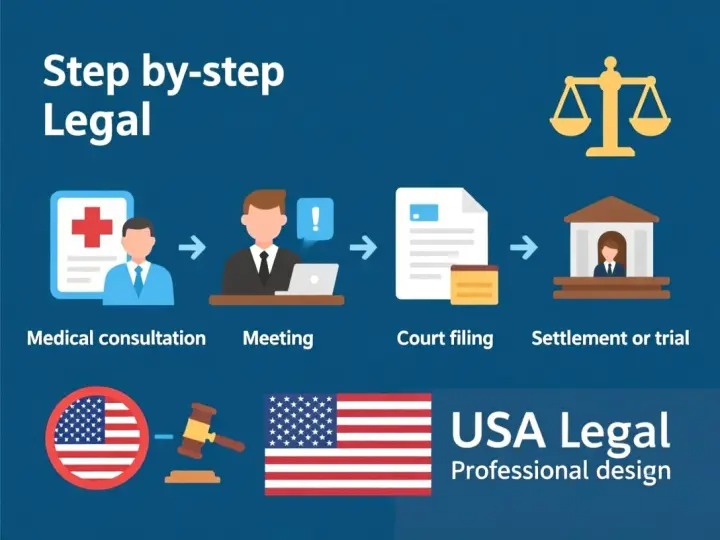
In order to successfully prosecute a surgical error lawsuit, use the following general steps (note: state-specific details apply).
- Recognise that there may be an error
- Notice symptoms, complications, and unexpected outcomes after surgery.
- Seek a second opinion from another doctor to determine if the result was within normal risks or due to malpractice.
- Gather Evidence
- Assess entire medical records: pre-op records, operative reports, records of anesthesia, and discharge summaries after the operation.
- Injuries documented: photos of scarring or visible harm, save hospital bill receipts.
- Keep a diary of the improvement, the pain, and the way that life has changed.
- Names of medical staff, dates, times, and conversations.

- Consult an Expert
- A medicolegal expert, preferably a surgeon with the same specialty, must analyze the evidence and state his opinion about the breach of the standard of care.
- In most states, a certificate of merit or expert affidavit is necessary prior to the commencement of suit.
- Pre-Suit Requirements / Notice of Intent
- Many states require a Notice of Intent to sue or similar pre-suit notice to the healthcare provider and their insurer, often with a waiting or investigation period.
- Some states have a review panel or medical review process before suit.
- Statute of Limitations (Time Limits)
- Each state has a statute of limitations on the action of the medical malpractice that is typically 1-4 years from the day the injury was recognized (or should have recognized).
- Some states also retain a “statute of repose” that requires a specific maximum time, no matter what discovery.
- There may be tolling (pausing) of time limits for minors, or if the provider concealed the malpractice.
- Filing the Lawsuit
- With an attorney, draft and file a state court complaint against defendant(s) (surgeon, hospital, etc.).
- The complaint establishes: what went wrong (breach of standard of care), how it caused damages, and what damages.
- Discovery and Negotiations
- Both sides exchange evidence: medical records, expert reports, and depositions.
- During or after discovery, settlement negotiations may happen. Many surgical error claims are resolved via settlement rather than trial.
- Trial or Settlement
- In the absence of a settlement, the case proceeds to trial. Evidence and expert witnesses are presented to a jury (or judge), who determines liability and damages.
- Reimburse economic damages (medical expenses, lost wages) as well as non-economic damages (suffering as well as pain). Some states allow punitive damages in the case of gross negligence is grossly reckless.
- Appeals (if needed)
- Either party can appeal the decision or judgment. Appeals encompass legal errors in procedure, but not re-examinations of facts.
What Compensation (Damages) Can Be Recovered
In a surgical negligence lawsuit, damages can include:
- Expenses towards the patient’s hospital
- Expenses of corrective surgeries
- Lost wages/loss of earnings capacity
- Pain and suffering, emotional distress
- Physical impairment, disability
- In wrongful death suits, the costs of the funeral, loss of society, or consortium are
Note: Some states restrict non-economic or punitive damages. Also, insurance policies may cap how much a hospital or doctor can be held liable.
Choosing a Medical Malpractice Attorney
Because surgical error lawsuits are complex, it is vital to retain a veteran medical malpractice attorney. Look for:
- Board-certified/experienced in surgical error lawsuits
- Good track record of medical negligence cases and settlements/trials
- Understand expert testimony and medical standards
- Contingency fee basis (They are paid only if you win)
- Capacity to discuss fees, potential risk, and chances of success

State-by-State Variations
Each state within the United States possesses laws governing:
- Pre-suit notice or medical review panels
- Statutes of limitations & repose
- Non-economic damages or limits on punitive damages
- Experts affidavit or certificate of merit requirement
- Florida requires a Notice of Intent and a professional affidavit before submission.
- California has its own notice period before a lawsuit.
Check local state laws where the surgery error took place.
Mistakes to Avoid When Filing a Surgery Error Claim
- Allowing too long to pass and passing the statute of limitations.
- Not getting or preserving relevant medical records.
- Discussing your case on the street or social media. Whatever you discuss can be given as evidence.
- Signed waivers or releases without review by counsel.
- Trying to handle everything without an expert or medical standard proof.
Conclusion
Surgery error suits/error in surgery suits are serious legal actions that necessitate meeting strict legal standards: establishing duty, breach, causation, and damages, within the timeliness imposed by state laws. If you believe you underwent a surgical error, act earlier rather than later: preserve evidence, secure clinical specialists, and secure a competent lawyer. With due legal process, you can potentially recover damages, hold professionals in the field of medicine accountable, and obtain recompense.
FAQs (Frequently Asked Questions)
A: Yes. Signing a consent acknowledges risk, but it will not justify beyond the degree of negligence that is described or the standard of care.
A: That depends, could be months to a matter of years. The months go to discovery, professional reports, negotiation, and possibly trial.
A: Yes, almost always. Expert testimony establishes what a prudent surgeon should have done compared to what actually did happen. The majority of states require an affidavit or merit certificate from an expert.
A: Some surgical risks are normal, even when doctors do everything correctly. However, if the injury happened because of a clear mistake, lack of skill, or failure to follow proper medical procedures, it may be malpractice. Usually, this is confirmed by a review from a medical expert.
A: Yes, if the mistake involved hospital staff, unsafe conditions, poor training, or faulty equipment. Often, both the surgeon and the hospital can be named in the claim.
[…] an extremely unusual case, if the provider is grossly negligent or willfully irresponsible, punitive damages, to punish and to deter, are possible, depending on the state […]