

Introduction
If somebody owes you money, damaged your belongings, or did not refund a security deposit, you don’t necessarily need to hire an expensive lawyer or face a lengthy, traumatic court trial. In the United States, as a last resort, you may sue the person or group in small claims court, a special court that is designed specifically to enable everyday citizens to quickly and cheaply resolve small disputes.
This step-by-step guide will outline the whole procedure of small claims court within the USA, from working out whether your case is admissible, to gathering evidence, submitting paperwork, appearing at your hearing, and claiming your judgment if you are successful.
As a renter, landlord, small businessman, or any other person who expects justice, this book will allow you to discover exactly what small claims court is about.
What Is Small Claims Court?
Small claims court is a part of the civil court that determines cases that deal with small sums of money. The United States has a limitation on the amount that can be sued. Consider the following, for example:
- In California, you can sue up to $10,000 (if you’re an ordinary citizen).
- In Texas, the amount is $20,000.
- In New York, it is $10,000 in most jurisdictions.
Small-claims court makes sense: It exists so that everyday citizens will be given the alternative of solving issues without the services of a lawyer. It is informal, less costly, and quicker than other, larger courts.
Certain typical examples of controversies regularly addressed using small claims courts are:
- A landlord who won’t return your security deposit.
- A negligent or irresponsible driver.
- One who lent money that they would never receive back.
- A person who gave substandard services or sold substandard goods.
- One who owes money to a small business.
Step 1: Check If Your Case Qualifies for Small Claims Court
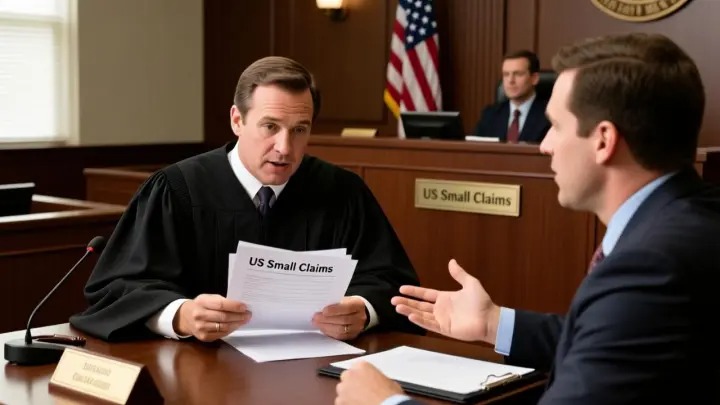
Your first task is to decide if your case is fit for the small claims court. Not all cases are.
Small Claims That You May Take to Court:
- Unpaid debt (personal loan, IOUs, unbilled debt).
- Damages to your belongings (such as your car accident or your house damage).
- Breach of contract (where there is a breach of any spoken or written agreement).
- Abandoned deposits left behind by landlords.
- Disputes between contractors or firms over goods or services.
Exceptions to Filing in the Small Claims Court:
- Divorce or child support proceedings.
- Criminal issues.
- Bankruptcy.
- Controversies during.
- Disagreements that are beyond your small claims dollar limits.
If your case has funds that are below your state limit and is a civil (not criminal) case, then you’re likely qualified.
Step 2: Calculate the Amount You Are Owed
Once you are clear that there is a fit between your case and the filing pool, you will need to figure out how much money you should request. CLAIM AMOUNT This is called the claim amount.
You can include:
- The principal balance (e.g., $2,000 loan).
- Additional expenses (repairs, late fees, or bounced check fees).
- Court filing fees (which may be tacked on to your claim).
But you can’t just go out and choose a random number. You need to be able to substantiate your claim amount with evidence such as receipts, contracts, or invoices.
Also, keep in mind the maximum claim amount for your state. If, for instance, your state sets a limit of $10,000, and somebody owes you $15,000, you cannot sue the person in small claims court for the entire $15,000. You can either:
- Just file for the max ($10,000), or
- Go file your case in the civil court.
Step 3: Gather Evidence and Organize Your Case
Your evidence is your strongest factor. You may very well have the best story, but without the appropriate substantiation, the judge would still make a ruling that is oppositional to your case.
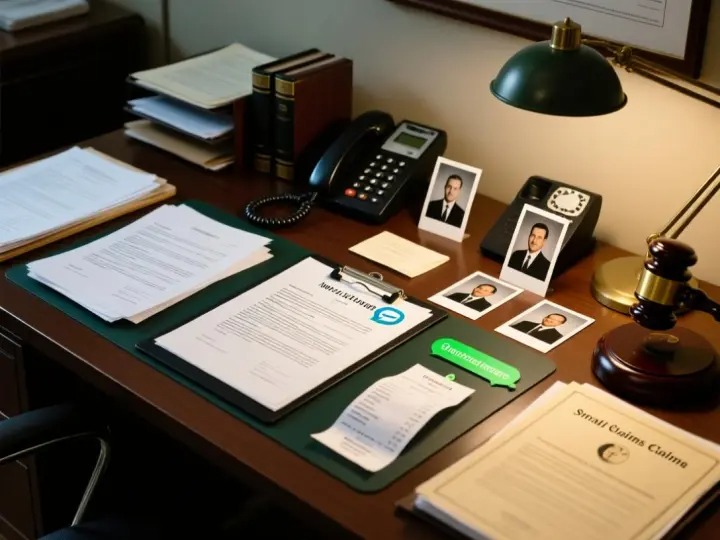
What Evidence Is Heard in the Small Claims Court?
- Verbal or written commitments (contracts).
- Receipts and invoices for money paid.
- Bank statements or canceled checks.
- Letters, emails, or other writings as evidence of correspondence.
- Photographs or videos (in the event of property damage, poor workmanship, etc.
- Eyewitness accounts of persons who either witnessed the event or know about it.
Pro tip: Keep all of your documents sorted in an orderly and easy-to-find folder. Bring three copies (one for you, one for the judge, and one for the defendant).
Step 4: File Your Claim at the Courthouse
Once you’ve prepared your evidence, submitting your case comes next.
How to Sue in the Small Claims Court:
- Go to your county courthouse or your statewide court website.
- Request the small claims complaint sheet (occasionally referred to as a Statement of Claim).
- Fill it in carefully with your details, the defendant’s details, as well as the amount that is being claimed.
- Pay the fee to file (usually between $30 and $200, depending on the state and the amount sought).
Upon your petition, the clerk shall:
- Give you a case number.
- Provide a hearing date.
Even some states enable online submissions, so it is even easier.
Step 5: Serve the Defendant (Notify Them)
You cannot simply file your claim and appear in court. You must inform the other person that you are seeing them. This is the serving of the defendant.
Common Methods of Serving a Defendant:
- Sheriff or court officer delivery.
- Certified mail with return receipt.
- Professional process server (someone paid to deliver court papers).
It needs to be established that the defendant was served. Without proper service, your case may be continued or dismissed.
Step 6: Prepare for Your Hearing
Preparation is the key to the game in the small claims court. Do not procrastinate.
Small Claims Court Preparation:
- Sort through your evidence and put it.
- Create a timeline of events.
- Have a succinct summary of your case (2-3 minutes).
- Practice stating the point, in plain language, to your buddy.
- Act modestly and be nicely dressed.
Some jurisdictions even require mediation before a full hearing. Mediation is where an impartial person will endeavor to assist both parties to come to some agreement. If, during meditation, both of you come to some agreement, then neither of you will even be presented before a judge.
Step 7: Attend the Small Claims Court Hearing
On the day your hearing is set, plan to be there early. Go through security, locate the courtroom, and
Check in with the clerk.
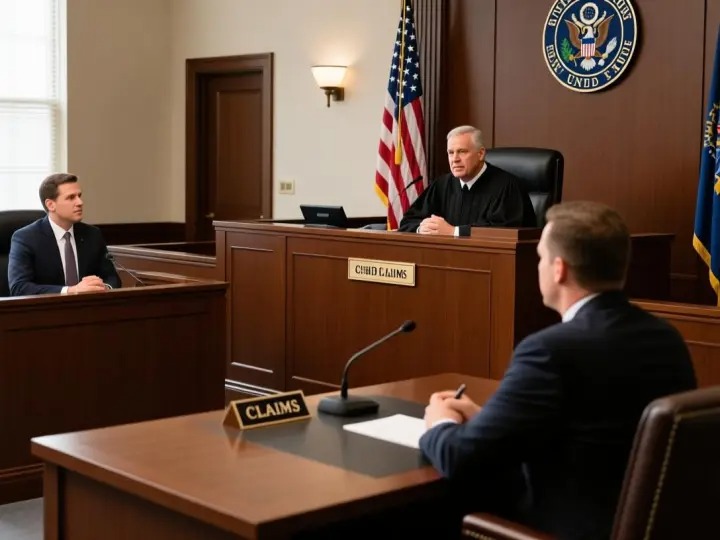
What Occurs during the Hearing:
- The judge or magistrate recalls your case.
- You and the defendant both explain your side.
- Each has witnesses and evidence.
- The judge can also ask questions.
- Each has the option of responding.
Upon hearing all this, the judge shall either:
- Decide immediately and announce the judgment in court, or
- Take some time and mail the decision later.
P.S. Don’t panic, be courteous, and be accurate. Judges don’t want theatrics; they want clarity.
Step 8: Collecting Your Judgment
It’s a great big win in small claims court, but the money doesn’t necessarily come to you automatically. Sometimes the defendant pays willingly, but sometimes the judgment has to be collected.
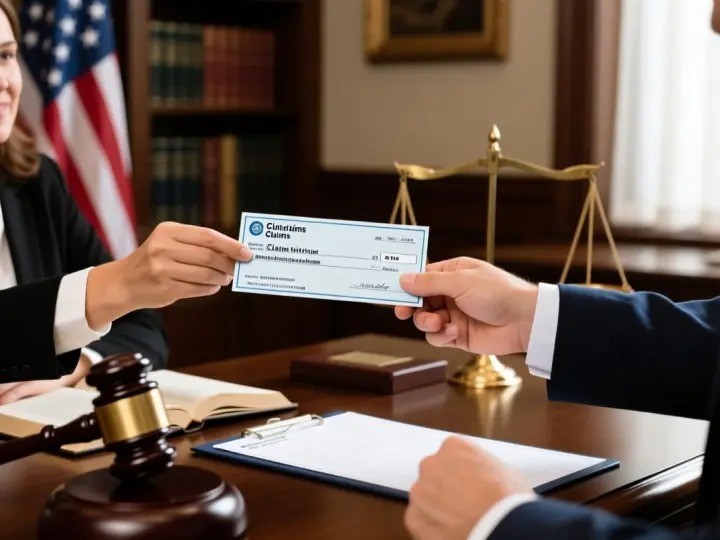
Ways to Enforce a Small Claims Judgment:
- Wage garnishment (funds automatically taken directly from their paycheck).
- Bank account levy (money withdrawn from their bank account).
- Property liens (consisting of a claim on their property until they pay).
The court provides the instructions and the forms to collect your judgment. You will occasionally need to go back to court to do this step if the defendant refuses to pay.
Step 9: Appeals and Next Steps
In most jurisdictions, the loser also then has time (usually very little) where they can appeal the ruling. Appeals, in some states, can only be entered by defendants, not plaintiffs.
Unless there is an appeal, the judgment becomes absolute, and then you can move on to collection efforts as needed.
Tips to Win Your Small Claims Case
These are some additional tips that will fortify your case even more:
- Be prepared with documents and proofs.
- Do not sensationalize or exaggerate.
- Rehearse your speech beforehand.
- Understand your state’s small claims limit and procedure.
- Be pragmatic about your expectations.
Final Thoughts
One of the simplest ways to deal with daily controversies is to lodge a case under the small claims court in the USA. It is affordable, cheaper than the standard court, and it is also designed for those who do not want to go through the hustle of acquiring a lawyer.
By following this step-by-step guide, making strong evidence, and acting professionally, your chances of fully winning your case are greatly improved.
In the event that your issue has more funds than your state permits, or the situation is legally complex, then it would be in your best interest to consult an attorney. However, the small claims court is the ultimate fix most of the time, even for most daily confrontations.
Frequently Asked Questions (FAQ)
No. Small claims court is set up so people can represent themselves without a lawyer.
It depends on your state. Most states have an award range from $2,500 to $25,000.
The judge may grant you a default judgment in your favor if you were served appropriately.
Most cases take between 30 and 90 days, depending on the court.
Legal options include wage garnishment or bank levies if the other party does not pay.