
Introduction
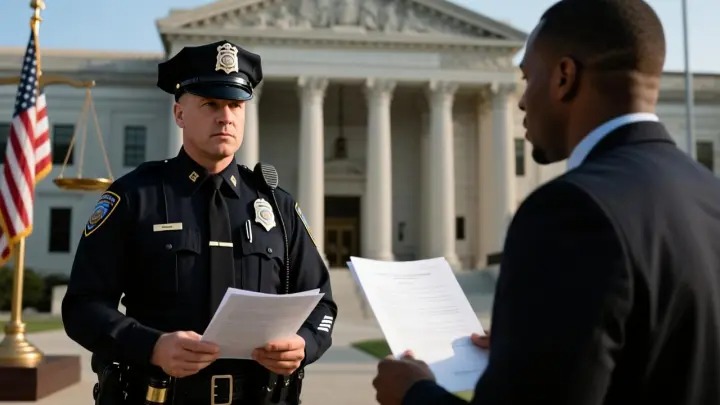
Police misconduct is defined as any action that is illegal or immoral and is perpetrated by a police officer when he is on duty to conduct his official business. Such action can have the capacity to abridge an individual’s civil liberties or conflict with the protection that is provided under the Constitution. Misconduct is a broad category of acts that can include physical abuse, emotional distress, or procedural violations.
High-Profile Cases of Police Abuse of Authority Taking Place Across the United States of America
- Police Brutality or Excessive Force: Refers to an undue or extreme usage of physical force that is exerted when effecting stops or when arresting an individual. Such an abhorrent practice as beating, choking, or utilizing a taser on an unrestrained suspect would fall under this category.
- False arrest and wrongful imprisonment: Means to detain a person without probable cause or any type of legal justification that will otherwise prompt an action of this sort.
- An illegal search and Seizure is a matter of entering privately held premises, such as houses, vehicles, or entering personally owned devices such as telephones, without a valid legal warrant or a legally tenable cause to do so.
- Racial Profiling and Discrimination: This is an unfortunate practice of detaining someone solely on the basis of race, religion, or ethnicity, as opposed to any real or tangible suspicion that such an individual might indulge in a wrong-doing.
- Fabrication of Evidence: Planting a false statement of evidence in police reports to justify activities.
- Sexual Harassment: Harassment, inappropriate contact, or abuse of authority in exchange for sexual favors.
- Denial of Medical Care: Neglect to give immediate medical assistance to those in detention.
This type of misconduct by police officers is a direct infringement of rights given to citizens through the U.S. Constitution and so presents a legitimate cause of action to victims to come to courts through litigation.

Your Legal Protections When it Comes to Police Abuse Claims
As an American citizen, each of us has some rights that are provided and protected by the Constitution of this mighty nation. When law enforcement officers cross their bounds of law and violate these rights, these same rights give you all the strength to challenge and fight their acts effectively.
- Fourth Amendment Protections: Safe from illegal search, seizure, and arrest.
- Fifth Amendment Protections: Right against self-incrimination and against being treated unfairly.
- Eighth Amendment Protections: Protection against cruel or unusual punishment.
- Fourteenth Amendment Rights: Protection of equal protection and due process.
Those aggrieved can file a suit under Section 1983 against officers or departments if they have in any way offended against their constitutional rights. This law specifically stipulates that government officials, such as officers, among others, may be held personally liable on a case-by-case basis.
Various Cases of Police Misbehavior: You Have a Right to File
1. Claims of Excessive Force
- When officers use extra force that is not needed, it is then excessive. Such as when an unarmed suspect is shot, or someone is beaten when they are not fighting back.
2. False Arrest or Wrongful Imprisonment Cases Examples
- A probable-cause or warrantless arrest is unconstitutional. Victims have a right to prosecute false arrest cases.
3. Complaints About Illicit Search and Seizure
- If police officers, who are also called policemen in some countries, come into your home without following it up by getting a warrant or search through your automobile without having a real and valid justification, this action is a direct infringement of your rights as stated in the Fourth Amendment to America’s Constitution.
4. Racial Profiling and Discrimination
- It is illegal to prohibit individuals from being stopped as a result of race or religion, as opposed to legitimate suspicions. Victims have a right to present claims of racial profiling.
5. Failure to Obtain Adequate Medical Treatment While in Arrest
- Police officers must provide medical attention to arresting individuals. Not providing medical attention can give rise to a wrongful death action upon loss of life.
A Comprehensive Account of Orders of Legal Procedures that Arise Subsequent to Filing Cases of Police Misbehavior

The filing of a police misconduct claim in America is a succinct set of defined steps. Individual steps in this sequence are of considerable importance, where a failure to complete any particular time frame could leave you losing your entire case.
Step 1: Report the Incident
Reporting an in a matter of minutes:
- Write down everything that you can remember.
- Collect medical records if injured.
- Gather video, body cam evidence, or CCTV footage if provided.
- Note the name of the officer, badge number, and vehicle number of the patrol car.
- Get and bring statements from those who saw what transpired.
Tip: Evidence is what makes any successful case. Without solid evidence, it is highly likely that your suit will later fail.
Step 2: Go ahead and make a formal complaint to the Internal Affairs department.
- Prior to a court appearance, victims many times initiate proceedings by expressing a complaint to a police department’s Internal Affairs Division.
- This step is to create a formal document of a professional nature.
- A department is required to investigate a complaint even if the results will vary. Even in the situation where Internal Affairs may choose not to impose any disciplinary action against the officer, the existence of this record significantly bolsters and enhances the strength of your lawsuit.
Step 3: Obtain a Civil Rights Attorney’s Representation
- It is quite a difficult and intricate affair to bring a lawsuit against police abuse.
- Seasoned civil rights lawyers are equipped with facts and abilities that are relevant to painstakingly crafting solid and credible cases, fiercely battling qualified immunity claims, and prosecuting just compensation recoveries on behalf of plaintiffs. Moreover, such lawyers are most familiar with dealing with the subtleties of federal cases, especially those that pertain to Section 1983 claims, as well as most claims that pertain to a given state law.
Step 4: Filing a Notice of Claim is required
- In that situation where you are about to bring a lawsuit against a city, county, or state police department, it is probable that you will have to take the step of filing a notice of claim. This is a special document that is a formal notification, which tells your intention to bring a lawsuit against such an entity.
- Deadlines are tight: frequently 30–90 days.
- Not following through on this important step can actually disqualify your lawsuit from further proceedings, even before it has a chance to commence.
Step 5: Initiating Legal Action by Filing Suit in Court
You may bring your action in any of the following:
- Federal Court Section 1983 violations of the Constitution.
- State Court is the right court of law to present tort claims that consist of severe charges, including assault, the unfortunate situation of wrongful death, or negligence cases.
The suit clarifies your claims, recites evidence, and seeks damages.
Step 6: Discovery Process
During discovery:
- Attorneys transfer papers and evidence.
- Officers and witnesses may be interviewed on oath (depositions).
- Clinical records and police records are scrutinized and reviewed diligently.
Step 7: Settling through Negotiations
Step 7: Settlement Negotiations
- Cases of police abuse of force often lead to a settlement.
- Cities and counties will occasionally compensate victims to avoid negative media coverage and long court proceedings. Settlements are made in reimbursement of medical bills, wages lost, emotional distress, and sometimes policy reform.
Step 8: The Trial Process in the Courtroom
If no resolution is made, then proceedings will proceed to a trial.
- A jury or a judge investigates evidence.
- They will decide if your rights have been violated and how much compensation you should receive.
- You may even recover attorney’s fees if you win.
Problems in Suits against Police for Misconduct
While legislation is on the victims’ side, such incidents are never easy.
- Qualified Immunity: This rule shields officers from prosecution unless they have blatantly broken “established” rights.
- Short Timelines: Many claims require that they be quickly filed without any undue delay.
- No Evidence: You can’t prove anything wrong without a witness or tape.
- Police Unions: They defend vigorously on behalf of officers and fight cases.
Possible Consequences and Rewards
If you win a lawsuit against police misconduct, you have a right to:
- Compensatory Damages to compensate for medical bills, therapy, lost wages, etc.
- Punitive Damages are intended to punish only the offending officer or even the department.
- Emotional Distress Compensation compensation for distress from trauma, anxiety, or humiliation.
- Attorney’s Fees, as is typical in most civil rights matters, it is often true that defendants will owe compensation to defray the expenses of attorney fees.
- Policy changes can result in courts having powers to direct that police departments bring about shifts in their training curriculum or change their mode of operation.

How Long do Cases of Police Misbehavior Take?
The time spent on such cases is a function of:
- Strength of evidence (video evidence compared to testimony alone).
- Complexity (one officer vs. many officers/organizations).
- Settlement willingness (many cities prefer to settle quietly).
- Court calendars (federal cases will sometimes last longer).
Stokes’ case took years to reach a jury, whereas a number of others have settled within a few months.
Practical Illustration (Brief Summary
- Dozens of American cities have paid millions of dollars in wrongful death and excessive force claims in a year alone in 2020 after wave upon wave of protests that rocked America to its foundations.
- One such highly notable example is that of a family that received compensation as a result of officers’ illegal activities that entered their residence without a legitimate warrant, which later proved to be a deprivation of rights under the Fourth Amendment.
- Instances such as these clearly illustrate the importance of meticulously documenting evidence and ensuring that you hire the most suitable attorney for your case, as this is absolutely critical.
Conclusion: Struggling to Obtain Justice in Cases of Police Misconduct
Police misconduct is a grave injury to human beings as well as an attack on the faith that citizens have in law enforcement authorities. In America, victims of such misconduct have strong legal rights that arm them to make claims against police officers for their acts. By rigorously following:
- The right processes of law
- Diligently obtaining all evidence that is pertinent to this regard
- As well as obtaining the services of a qualified civil rights lawyer
Such victims can actually plead their cause effectively.
Even as such claims are difficult given deterrents like qualified immunity and short statutes of limitations, actionable suits do more than deliver compensation; they raise voices for police reform and police accountability. This is not about a single victim bringing a suit against police misconduct but about equality, about protecting civil rights, and about seeing that law enforcement works for all of us.
Frequently Asked Questions (FAQs)
Wrongful termination occurs when an employee is fired for an illegal reason. Discrimination, retaliation, breach of employment contract, and violations of public policy are all grounds for this. Even within an at-will workplace, employers are prohibited from dismissing someone for reasons that actually violate federal or state employment laws.
Yes. Even within the doctrine of at-will employment, employers are prohibited from terminating employment for unlawful reasons. If you were fired due to discrimination, retaliation, or for engaging in protected activities, you may still have a valid wrongful termination claim despite being at-will.
The deadline varies by the type of claim and by state. Discrimination claims must be filed with the EEOC generally within 180 or 300 days. Other types of wrongful termination lawsuits can vary from one to three years, so it is advisable to act quickly.
If you prevail in your claim, you may be awarded compensation for lost wages and benefits, emotional distress, and sometimes punitive damages. Sometimes the court will also order the employer to pay your attorney’s fees or even to reinstate your job.
While you are not legally required to hire a lawyer, a seasoned employment attorney can significantly enhance your chances. The lawyer will help in gathering evidence, meeting deadlines, negotiating a settlement, and representing you in court if need be.