
Introduction
In the contemporary digital era that we currently inhabit, the reputation of an individual is widely recognized as one of the most crucial and invaluable assets that a person can possess. With the rapid proliferation of various social media platforms and the establishment of open lines of communication within workplace environments, it has become increasingly effortless for false statements and misleading information to spread quickly across multiple channels and forums.
This primer attempts to provide an authoritative introduction, in clear and concise English, of what actually is defamation, how it works within the scenario of both social media and a variety of workplaces, what evidence there is to provide to support a claim, what it takes to file a legal claim, what it costs, what damages are recoverable, what deadlines are necessary and referred to cutoffs, and what mistakes are necessary to avoid along the way. If you are actually a resident of the United States and genuinely are interested in protecting your reputation legally, then this article is especially for you.
What is Defamation?
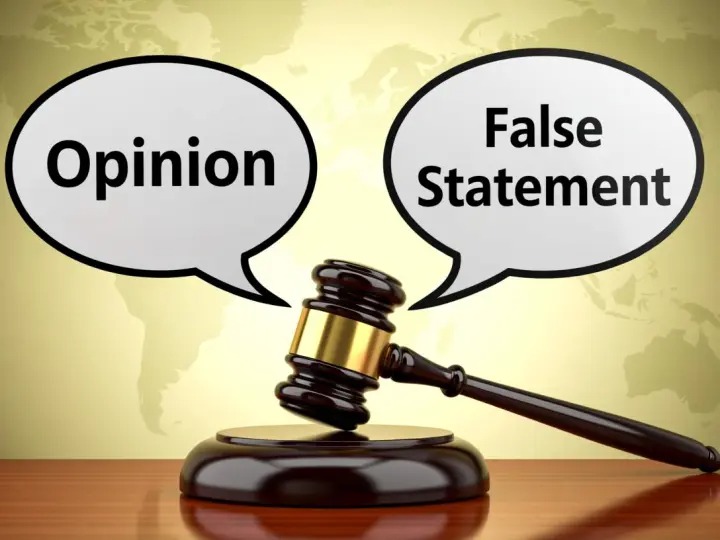
Defamation is when an individual publishes information that is not true and presents it as if it’s true, and this winds up soiling your reputation in any way. It should be pointed out that for something to be classified as a case of defamation, it should be something beyond a mere opinion or a personal belief of someone; it should be an issue of a statement that can be conclusively proven to be false or true using hard evidence.
As per the law codified under the jurisdiction of the United States, it is necessary for people to be aware of the fact that there are mostly two major types of defamation, of which they should be well-informed:
1. Libel (Written Defamation)
- Oral or written and published falsehoods, including but not limited to posts on social sites, blogs, posts on email, or newspapers, can be qualified as falsehoods.
- As an example, if an employee decides to post on Facebook an announcement or a claim that you have engaged in stealing funds from your company, it would be an accusation totally false accusation and not based on any actual fact.
2. Slander (Verbal Defamation)
- The fallacious verbal communications can be manifested as forms of office gossip spreading among office workers or unequal accusations raised in a meeting.
For example, there was a time when your manager inaccurately informed others of your supposed harassment of an employee. This can give rise to a series of misunderstandings and consequences.
Defamation perpetrated within the office environment
Workplace defamation is a case whereby an employer, a manager, or even a workmate spreads false or deceptive information and has a probability of negatively impacting your professional image to a considerable extent. This negative spreading can come with long-term repercussions on your career, affecting how people look at you within and outside the workplace.

Examples of workplace defamation are:
- A false rumor that you have stolen money from the company.
- A manager who is acting untruthfully towards others and giving false information about your ineptness.
- A co-worker who intentionally spreads false news and unsubstantiated rumors concerning your private life, thus hindering and hopefully decreasing your chances of being promoted and professionally developed within the firm.
Consequences of workplace defamation:
- Missing a promotion
- Upgradation to a higher grade or category
- Weakening of the quality of relationships you have with your co-workers.
- Affective distress and anxiety
Email harassment and defamation with respect
The social media sites are perhaps the best source for generating cases of defamation. This is so because posts, tweets, or videos can immediately reach a group of thousands of people. It means that the proliferation of misinformation on the internet can immediately do a lot of actual harm to people and reputations.
These cases, if they fall under the category of social media defamation, are:
- Spreading false and deceptive information pertaining to someone’s private life and personal matters.
- Disseminating false information about a company’s services or goods.
- The process of opening fake accounts with an aim to discredit or destroy a particular person’s credibility.
- Posting pictures or videos, photoshopped or enhanced with software, with a deliberate purpose of deceiving or misleading others.
If we compare the disparity between idle or casual remarks, for instance, uttering the thought, “I do not like this person,” and a false factual comment, for instance, uttering something such as “He cheated clients,” there is a large disparity. The latter can be defined as defamation, particularly if it leads to actual material damages for the person it is about.
Legal Action for the Purpose of Defamation Claim
To effectively settle a case of defamation in the legal jurisdiction and framework of the United States, it is vitally necessary that you have credible evidence to back a number of essential factors in the case.
- A False Statement of Fact: In order to be considered false, a statement should be obviously incorrect and should not be a question of personal opinion or belief.
- Published or Transmitted to Other People: It is of paramount significance that the particular statement under consideration has actually been submitted to and come across by a different person. In essence, for the statement to be relevant, there needs to be a situation wherein a different person has actually come across, read, or listened to the material of such a particular statement.
- Fault of the Person Making It: Either negligence (carelessness) or actual malice (intentionally spreading lies).
- Actual Harm Caused: You must prove that the false utterance in question has actually caused damage to your reputation, your career future, or your financials.
Evidence Required in Defamation Cases Claim
To lay down an effective libel claim, there is a requirement to have dependable and factual proof on which the claim is made. There are various useful proofs readily available to be used to effectively provide strength and solidify one’s case in this respect:
- Pictures taken from any of the following: various social media platforms, email messages, or confidential texting conversations.
- A declaration or explanation from contemporaries, or from any others who heard of the false accusation or came to hear of it from any means.
- Retaining records of a person’s work history clearly indicating situations when there was a demotion or firing of workers directly due to cases of defamation that were obvious and plain.
- The commercial or economic loss directly caused as a reaction to your business being negatively affected owing to the impact of false reviews published on the World Wide Web.
- Psychological reports, which are prepared in situations where an individual experiences emotional distress that has been induced, will be generated.
How to Sue for Defamation: A Step-by-Step Guide
Step 1: Begin by gathering all evidence of support.
- Screenshots, posts on various social sites, relevant emails, audio, and video recordings.
- Record the means by which the statement did you a wrong (loss of job, loss of business, distress.
Step 2: Initiate the Process by Serving a Formal Cease-and-Desist Notice on the Parties Involved
- At the beginning of the legal process, it is not unusual for many lawyers to make the first move by serving a formal legal letter to the person in question. This letter is to demand that the person stop and desist from spreading any lies and also to demand the immediate removal of any deceitful material that has been posted.
- This particular step often has the potential to remove the issue once and for all without any additional intervention.
Step 3: Initiation of Legal Action by Filing a Formal Complaint to the Court
- If the matter does not get resolved and is a recurring issue, you are completely free to file a case seeking legal remedy in a federal court or any state court of your selection, depending on the particular details of your case scenario.
- You will give direction to your attorney to prepare and write a detailed written complaint to touch on the matter of false speech as well as damages caused by it.
Step 4: Engagement of the Court Process
- The person accused (defendant) responds.
- Both parties present evidence (Phase of Discovery).
- There are possible witnesses.
- The case may end in a settlement or go to trial.
Step 5: Settlement or Judgment
- A high percentage of cases of libel tend to settle outside of the trial process.
- Otherwise, the judge or jury decides whether there was defamation and awards damages.
The Procedure of Reaching a Settlement in a Defamation Case
Far fewer than half of the libel actions ever reach trial. Settlements are money- and time-saving.
- Negotiation: Both sides’ lawyers discuss and negotiate a possible sum of settlement that the two parties can reach an agreement on.
- Mediation: A neutral third person facilitates an understanding between both sides.
- Settlement Agreement: In this sort of case, the aggrieved victim who has been impacted by a given issue is given a form of compensation aimed at making amends for damages caused to them. In exchange, the other party to this case commits to ceasing the spread of any misinformation that was possibly being spread earlier regarding the issue.
Cost of Filing a Defamation Lawsuit
- Filing fees for court cases (range depends on state to state, $200–$500 on.
- You pay for a lawyer’s time: Defamation lawyers are charged an hourly rate ($200–$500 an hour). Some will accept a contingency fee (pay if you win).
- fees for retaining an expert witness, should there be a circumstance.
Types of Damages You Might Possibly Recover in Defamation Claims Lawsuits
If you are successful in bringing a claim for defamation, you can potentially recover compensation for the following areas.
1. A grave monetary and financial loss
- Information and details on
- Lost income of the business
- Projected loss of income in the
2. Non-Economic Damages
- Pain and distress
- Emotional distress
- Damage to reputation
3. Punitive Damages
- It is awarded in situations where it was evidently established that a false assertion was made and there was a discernible malice or an obvious and plain intent to do mischief or to do an injury to the adversary.
Statute of Limitations for Actions for Defamation
There is a time-bar for filing suits for defamation and for all the states, normally 1 to 3 years from the date of the false representation.
Examples:
- California 1-year period
- New York Times period of 1 year
- Florida for a duration of 2 Years
Mistakes to be Avoided at All Costs
- Delaying for an unreasonable and excessive period of time before filing any litigation or legal action.
- The inability to hold and preserve a sufficient amount of evidence.
- Combining one’s personal opinions with acts of libel
- Dealing with and settling the matter at hand without resorting to consulting or engaging lawyers in situations considered to be grave and important.
- Accepting a weak Agreement before testing for effects. What do I report for a resumed account?
Conclusion
All in Claims for defamation are potent legal instruments that can effectively safeguard your reputation from false information and false imputations. It does not matter if such disparaging comments are published within the confines of your office premises or on any of the various types of media platforms on the internet; the law provides you with the strength to stand and counter any such attack. Keep in mind the important steps:
- You must gather convincing evidence.
- You have to work expeditiously within time limits.
- You should consider preparing a cease-and-desist letter in advance.
- If necessary, go on to file a lawsuit.
Be aware of what damages you can recover. Keeping your reputation intact counts. You can put a stop to misinformation and recover damages for the damages caused with the appropriate legal process.
Frequently Asked Questions (FAQs)
And so, if there is inaccurate information in the review that can truly be detrimental to your company and its reputation, then you certainly do have a right to remedy. Whereas it is typically true that truthful negative reviews are given immunity under laws of free speech, it should be known here that inaccurate information or sheer falsehoods are not given immunity under laws of free speech.
You still have the right to file for legal action if you have made sure to preserve a screenshot of your post, or if there are others who would be treated as an eyewitness and who have actually seen your post.
Actually, if your employer is engaged in spreading false information and such false information does harm to your career development, it is a serious matter.
Depends. Some resolve within months, and others within 1–2 years if the case proceeds to trial.
It is highly advisable to seek legal assistance, as the law on defamation is normally extremely difficult and complex, and it may be hard to establish damages without a capable legal specialist.