

Introduction
When you request FMLA leave (Family and Medical Leave Act leave) in the U.S., and it is turned down, it could frustrate you and not work in your favor if your reason for your leave is significant, for example, your own medical condition or your own family emergency.
The silver lining: You have federal law rights when your FMLA is denied.
Very few workers comprehend these rights, and they do not realize the process that they ought to follow in order to safeguard themselves following denial.
Here, in this article, we walk you through all that you need to know, just what FMLA actually covers, why your leave is likely to be denied, your rights in your position, and what is ahead for you.
This guide communicates in simple, human English so that all American workers understand, with competence and confidence, how to appropriately process a denied FMLA claim.
What is the FMLA, and how does it work?
The Family and Medical Leave Act (FMLA) is a Law that grants qualified employees up to 12 weeks of unpaid, job-protected leave in the same 12-month period for enumerated personal or family medical justification reasons.
That means you can take time off from work for a little while without your job or health insurance coverage being terminated in the process.
These are the significant reasons why you may seek FMLA leave:
- To manage your own serious medical problem
- For caring for a spouse, parent, or child with a serious medical problem
- For your child’s birthday or adoption purposes only
- For military family leave, like for caring for an injured service member or for settling active duty matters
Who is Qualified for FMLA Leave?
Employees do not automatically fit the FMLA category. There is a strict eligibility criterion in law. You should all abide by these:
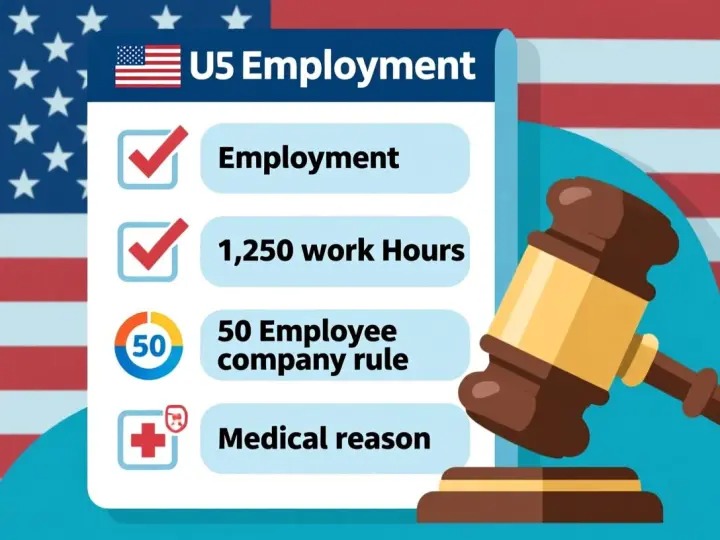
- You should have worked for your employer for at least 12 months.
- The 12 months do not have to be continuous, but you should have worked for at least one year in all.
- You have worked for at least 1,250 hours in the previous 12 months.
- That is roughly 24 hours a week average. If you work less, your employer may legally deny the leave.
- Your employer must cover you under the FMLA.
- Typically, your employer is in coverage if it has 50 or more employees within 75 miles of your workplace location.
- Your reason for leaving should be FMLA-qualified.
For example, going for the sake of a holiday or for dealing with daily matters does not count; it is only for the sake of a serious sickness or an insured family event.
Provided that you qualify on all these fronts, federal law grants you FMLA leave.
Common Reasons Why FMLA Leave Is Denied
Even if you’re qualified, your employer can still refuse your FMLA application. Here are the common reasons why:

1. You’re Not Qualified
- Since you have not worked for 12 months or for 1,250 hours, your employer may refuse your request for leave.
2. Your Employer Is Too Small
- In the case that the company doesn’t have 50 workers in a 75-mile radius, the FMLA is not applicable. Those small businesses have exemptions from federal regulations.
3. You Lack or Have an Incomplete Medical Certification
- When you’re applying for medical leave, you should submit paperwork from your physician for your serious medical condition. If your form is not completed, unclear, or doesn’t contain information such as treatment dates, your employer could disqualify it.
4. You Failed to Follow Company Protocols
- Employers can refuse your leave if you do not follow their leave rules, like not telling HR the right way or not submitting the necessary forms.
5. You Missed Deadlines
- Normally, medical certification is supposed to be issued within 15 calendar days from the date of demand from the employer. Non-completion may attract denial unless justified.
6. Employer Misunderstanding or Retaliation
- Too, occasionally, employers mistakenly deny FMLA leave in misunderstandings of the law and even in retaliation. If your employer is denying your request because they’re angry or your absence poses “hardship,” that is not an allowable basis for denial of FMLA.
Your Rights When Your FMLA Leave Is Denied
When your FMLA application is denied, you’re not totally powerless. You’re entitled, under federal law, to certain rights to appeal the decision or correct it.
Let’s discuss them in detail:
Your employer is required to inform you in writing why your request was denied. They cannot just state “no.” For instance, if they deny you, they have to list why that is, such as not enough work hours or the wrong paperwork. This written description is valuable if you want to complain/appeal in the future.
2. You Have the Right to Edit or Add Additional Information
Your employer should also provide you with the right to complete your medical forms if they have been left incomplete. You could ask your doctor for missing information or for clarification on inconsistencies. Once you present the fixed certification, your employer must rescind your leave request.
3. You Are Safe from Retribution
Your employer may not punish you for requesting FMLA leave – even if it was denied.
They cannot legally:
- Fire you
- Work fewer hours
- Demote you
- Harass or menace you
They do, that is FMLA retaliation, and it is unlawful. You could complain or even sue for damages.
4. You can send a complaint to the Department of Labor (DOL)
You may complain to the Wage and Hour Division of the U.S. Department of Labor if your rights under the FMLA have been infringed. They will look into it and might call your employer to fix it. This is a free and official process, and you don’t need a lawyer to start it (though having one helps).
5. You Can File a Lawsuit
If your employer wrongfully and in bad faith denied you your leave, you may seek court remedies.
You may bring your case in civil court or federal court for FMLA law violations.
You may win and receive:
- Benefits and wages lost
- Liquidated damages (extra money as punishment for your employer’s breach)
- Attorney’s fees and court costs
You should bring the lawsuit within two years of the violation (three in case of intentional violation).
6. You Are Qualified for Returning to Work After Authorized Leave
Even if your leave was granted, but your employer won’t rehire you, that is illegal too. You’re entitled to your job back or an equivalent job, with the same wages and benefits.
What to Do if You Are Denied FMLA Leave – Step-by-Step Guide
Let’s just briefly discuss what to do if your employer denies FMLA leave:
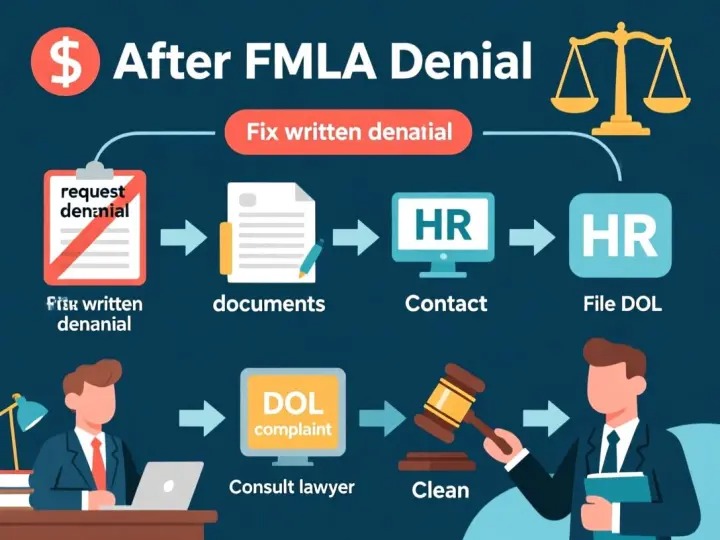
Step 1: Requesting the Denial in Writing
Always ask for a written statement of denial.
You will require this paper in case you decide to appeal the decision or to communicate with the Labor Department.
Step 2: Read the Reason Carefully
You read the employer’s denial reason closely.
Due to eligibility issues? Lack of paperwork? Improper notifications?
Then you recognize why and do your part to correct the issue.
Step 3: Confirm your Eligibility Twice
Reread the provisions for FMLA:
- Have you worked for more than 12 months?
- Have you spent 1,250 hours working in the past 12 months?
- Does your employer have at least 50 employees working within 75 miles?
- Is your reason for departing covered under FMLA?
If all these are correct, chances are that your case is legit.
Step 4: Resolve Any Doc Issues
If your medical certification was brief or did not specify, request your healthcare professional to rewrite it.
- Ensure that it expressly contains:
- Your status or diagnosis (you may request blanket terms such as “serious health condition”)
- Expected duration of absence
- Start date and anticipated date of return
- Physician’s signature
Once it is corrected, it is to be resubmitted to HR.
Step 5: Communicate Professionally
Be professional and composed when talking to HR.
Please present your case in its fullness and ask if more is required.
Save paper copies of everything you communicate that is, emails, minutes of meetings, or letters.
Step 6: Filing a Complaint with the Department of Labor
If your employer is still refusing or if you think that retaliation/discrimination is present, phone the Wage and Hour Division of the Department of Labor.
You may complain via phone or on the internet.
They will look into it and call your employer for an explanation.
The employer, in most cases, resolves the issue shortly after the DOL steps in.
Step 7: Discuss With an Employment Lawyer
Your situation is grave, as if you had been terminated, demoted, or harassed for requesting FMLA. Then consult with an employment law attorney.
The majority of attorneys offer free consultations and may inform you if it is worth your while for your case.
Step 8: File for Lawsuit (If Necessary)
Should the Labor Department lose your case, your second alternative is filing for a civil lawsuit in federal court.
Your lawyer may back your call for lost wages, emotional distress, and attorneys’ fees.
Examples of Real-Life Applications Release
Example 1: Denied for Lack of Hours
Sarah had worked 1,100 hours in the prior year and was asking for FMLA to recover from surgery. She was denied it. This was reasonable because she had not worked the 1,250 hours.
Sample 2: Refused Since Certification is omitted.
James provided a doctor’s note that did not indicate how long he had to be off. HR turned it down. Then, James received a precise note from his physician with a specified recovery time. HR accepted it afterwards.
Example 3: Retaliation in Response to
Lisa had asked for FMLA to care for her ill mother. She was discharged just one week later for having “attendance issues.” This was illegal retaliation, and she proceeded to settle an FMLA lawsuit.
Best Practices for Minimizing FMLA Denials
- Provide your employer with advanced warning when you expect to need time off.
- Have all your HR and medical forms sorted.
- Be certain your physician properly completes all of your FMLA forms.
- In case your HR is not aware of FMLA regulations, cite the regulations from the Department of Labor in a discreet tone.
- Retain all email and discussion records for your leave.
Conclusion
Dealing with denied FMLA leave is never pleasant, and even worse when you’re in a personal/family crisis.
But keep in mind, though, if you’re an American worker, you do have real rights in the FMLA.
- Do not lose heart if your employer declines initially
- Identify our why
- Correct errors
- Communicate effectively
- Consult the Department of Labor or a seasoned employment lawyer if the need arises.
Your work, your benefits, and your right to look after yourself or your loved ones are safeguarded legally. When it’s your health and your loved ones on the line, educate yourself on your rights, take action, and speak up for yourself.
Frequently Asked Questions (FAQs)
No. They should have a legitimate, lawful reason, such as ineligibility or failure to list certification.
No. You just need to ensure that you describe in enough detail for your employer to recognize that the leave would qualify for FMLA.
Generally, yes, no. Retaliation for requesting FMLA is strictly prohibited in federal law.
If your workplace is small enough to employ fewer than 50 workers within 75 miles, the federal FMLA won’t cover you, but your state law may give similar coverage.
You can correct or update the medical documents and resubmit them to your employer for review.