

Introduction
It is devastating to lose a beloved relative or loved one. If their death was due to the negligence, foul play, or illegal act of an outside third party, then there is more likely to be a justifying cause of action for wrongful death. Wrongful death actions are lawsuits instituted by surviving descendants or beneficiaries in a court of justice to seek damages due to losses from death.
This guide takes you through how to file a wrongful death claim in the United States, from eligibility to obtaining evidence, filing, negotiating, or litigating. Note: State laws do differ, so consult with an accomplished wrongful death attorney from your state at all times.
1. What Is a Wrongful Death Claim?
- A wrongful death action (or wrongful death claim) is when death results as a proximate result of the negligence, recklessness, or intentional actions of another.
- Also separable from criminal prosecution (which is of public interest). A wrongful death case is a lawsuit in the civil realm: it’s to pay survivors, not to punish the wrongdoing party (though punitive damages do come onto the scene in exceptional cases).
- All States admit two related or parallel claims:
- Wrongful death action with survivor losses (lost future support, mourning, loss of consortium)
- Survival action or survival claim, in which the estate of the decedent is awarded damages the dead individual would have brought an action for had they survived (medical costs, pain, and distress before death)
Since each state defines these differently, the information will differ depending on the state of the death location.
2. Who Can File a Wrongful Death Claim? (Eligibility)
Before proceeding, the standing has first to be established, i.e., legally, you are entitled to sue on the claim.
2.1 Surviving Spouse
In all but a minority of jurisdictions, the surviving spouse also has the right to sue for wrongful death.
2.2 Children or Dependents
In the event there is no surviving spouse, or in the majority of states, also children or minors who were dependent uponthe decedent, they can sue.
2.3 Parents or Other Relatives
In case there are no spouse or children of the deceased, then the parents in general submit the claim. Others also accept the siblings or the other dependents.
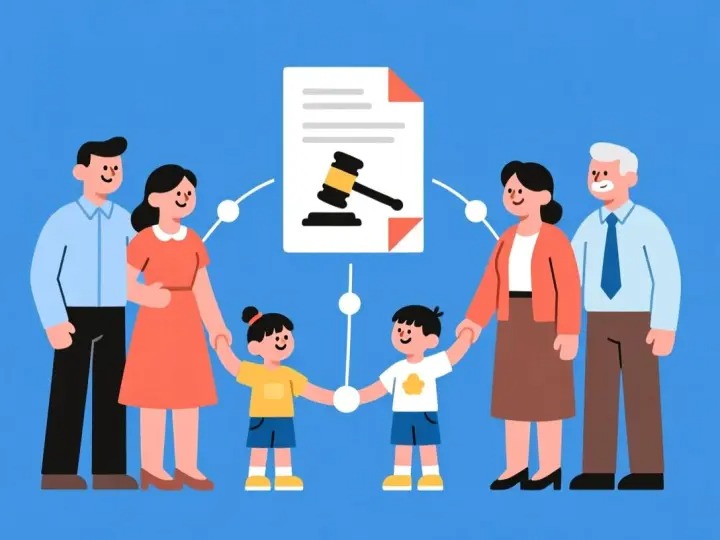
2.4 Personal Representative or Executor
In most cases, the lawsuit must come through the decedent’s estate or through the personal representative or executor who has been appointed. The estate has the capacity to schedule the survival action and the wrongful death action.
2.5 State Statutory Rules
State laws regulating wrongful death stipulate strict guidelines with respect to who has the right to sue, how the claims should be distributed, and what precedent should be applied.
Takeaway: Always check your eligibility prior to making certain the proper person or party has the claim before doing so.
3. Statute of Limitations: How Soon You Must File
One of the very absolute time restrictions in an action for wrongful death is the statute of limitations (statute-determined time limit to sue). Failing to meet it typically disallows your right to damages altogether.
- All but a few of the states allow 1 to 2 years from the time of death for the portion or the whole of the action.
- In some cases, time began with the death of the decedent; in others, with what should have been discovered of the cause (negligence).
- Certain States grant unique exceptions or extensions (e.g., due to unlawful governmental agency actions or when the defendant departs from the State).
- As the statute is enforced strictly, find a lawyer immediately, don’t delay.
4. Step-by-Step Process to File a Wrongful Death Claim
This is a general framework. Cases do differ with state statute, collision type, and sophistication.
Step 1: Seek an Experienced Wrongful Death Lawyer
You Need a Wrong Death and Litigation Lawyer. One who is an expert
- Check If You Do Have A Legitimate Claim
- Fill out the state statute mandates Manage insurance company
- Negotiations and hostile parties: Store evidence, experts, and articles
- File papers, motions, and litigate or settle your case
All wrongful death attorneys handle their cases on contingency fee plans i.e., never take a fee unless you win.
Step 2. Open or Administer the Decedent’s Estate / Probate (if needed)
Inasmuch as the decedent does not have the right to legally act, then it has to go through the estate or through an agent with the right to legally act (executor, personal representative). Certain jurisdictions insist that the estate must first go through probate (be opened) before claims can be made.
It also helps designate the personal representative in case there is a will. If there is no will, then there is a court appointment in general. Minor children also can have their interests protected with a guardian.
Step 3. Investigate and Gather Evidence
This is a very delicate time. Your attorneys must put forward an air-tight case with supporting evidence. The major types are:
- Incident / Police / Accident Reports: Official reports (police, fire, OSHA, transportation, safety) of facts, diagrams, statements from witnesses.
- Medical Records & Death Certificate: Course of treatment, cause of death, results of autopsy, complications. A certified copy ofthe death certificate must be supplied.
- Expert Reports / Medical Experts / Forensic Experts: For causation, standard of care, negligence, and damages purposes.
- Statements & Affidavits of Eyewitnesses: Eyewitnesses, onlookers, colleagues, or survivors may give testimony as to what transpired during the incident.
- Financial Documents: Pay stubs, tax returns, employment records, benefits, projections of future income.
- Expenses and Receipts: Medical expenses, funeral expenses and burial expenses, cost of estate, loss suffered by survivors.
- Policy of Insurance: The insurance policies, declarations, and limits of the defendant’s coverage.
In discovery (after suit has been initiated), there is the sharing of documents, taking of depositions, interrogatories, and potential subpoena of records.

Step 4. Identify and Name Defendants / Liable Parties
You have to specially determine who is legally responsible. The possible defendants can be:
- Individuals (e.g., irresponsible driver, property owner
- Organisations (e.g. maker of unsuitable products)
- Governmental bodies (e.g., municipalities, agencies), whilst suing a government is fairly standard but normally have special rules (notification rules, abbreviated time limits)
- Employers under vicarious liability (e.g., “respondeat superior”)
- Multiple chain parties (e.g., producer, wholesaler, installer)
Your attorney will research applicable liability theories (negligence, strict liability, wrongful act) of the given facts.
Step 5. Prepare and File the Complaint / Civil Action
When your lawyer is set, your lawyer will draft a complaint (also known as a petition or a plea) which:
- List causes of action or thrust of claim (battery, negligence, etc.)
- Lists plaintiff(s) and defendant(s)
- Asserts facts proving duty, breach, causation, and damages
- Seeks relief (funeral costs, punitive damages, etc.)
Second, the suit is filed with the right court (federal or state, as the case may be, with federal jurisdiction). The court issues a summons to the defendants to respond.
Step 6. Discovery and Pretrial Motions
Both then proceed to the stage of discovery:
- Interrogatories: written questions answered on oath
- Document requests: produce records, correspondence
- Depositions: verbal testimonies given on oath through persons participating and witnesses.
- Expert depositions: questioning expert witnesses during depositions.
Pretrial motions like summary judgment and motion to dismiss also might be entered to limit or to exclude some parts of the case.
Step 7. Demand, Negotiation, Settlement Attempts
As is frequently the case in wrongful death claims, many of these cases were settled before going to trial. Steps include:
- Letter of demand: the lawyer writes a letter to demand compensation in a case by providing some facts, legal issues, and compensation based on them.
- Settlement offers / mediations: an offer, a counteroffer, and maybe even a mediation with a neutral third party.
- Assessing offers: Your lawyer will weigh proposed settlements against the likely outcome for you at trial, considering risk.
- Yes or no: If there is an agreement, the court will see a settlement document.
In the event that all settlement attempts are unsuccessful, a case can go to trial.
Step 8. Trial / Verdict
At trial:
- Pre-trial conferences occur regularly throughout the
- Plaintiff gives testimony and presents witnesses to testify
- Defendant Cross-Examines, Gives Defense and Evidence
- Closing statements
- Deliberate and render a verdict, judge or jury
After the judgment, the court shall then grant the damages to you. The loser shall be eligible to appeal.
Step 9. Collecting the Judgment / Enforcing the Award
Winning is one thing; collecting it is another. Your attorney may need to:
- Ensure the defendant has assets or insurance to pay
- File liens, garnishments, or use collection tools
- Negotiate post-judgment settlements
- Deal with appeals or reductions by courts
5. Types of Damages You Can Seek
In a wrongful death claim, survivors can pursue several categories of damages (depending on jurisdiction):
5.1 Economic (Special) Damages
These are quantifiable monetary losses:
- Last medical and hospital costs by the time of death
- Costs of a funeral, a burial, or a funeral home
- Hedonic damages for future earnings of the decedent and other economic benefits.
- Lost value of housework (childcare, services, etc.)
- Loss of inheritance
- Out-of-pocket expenses incurred by survivors
5.2 Non-Economic (General) Damages
The following are more subjective but compensable in many states:
- Pain and suffering (for survivors)
- Impact of Lives Lost on Victims’ Families: Loss of Companionship, Society, Guidance, or Consortium
- Pain and suffering, loss of companionship, and enjoyment of life.
5.3 Punitive / Exemplary Damages
In situations of egregious behavior, intentional acts, or gross negligence, some states provide punitive damages as a means to punish the offender and discourage others. Not all states permit them.
5.4 Survival Claims Damages
If the decedent had a right to bring the action for injury done to him and it resulted in death, then an action may be maintained by his personal representative, who can recover. : (a) Loss of earnings or earning capacity from the time of injury until death, and not exceeding three years; (b) Loss of support or maintenance for actual dependents; (c) Medical and funeral expenses.
- Decedent’s pain and suffering before death
- Medical expenses incurred before death
- Lost income of what the deceased would have earned had they lived

6. Standard of Proof & Legal Elements
A plaintiff (surviving) must typically prove the following in order to prevail in a wrongful death claim:
- Duty of care: there was a legal duty for the defendant to act in a particular manner (e.g. motorist must adhere to traffic laws)
- Breach of duty: the defendant did not act as would a reasonable person or entity under the facts
- Causation: the defendant’s violation caused or substantially contributed to the decedent’s harm, resulting in death
- Damages: Measurable damages suffered by the survivors
Under American civilian law, the standard that is normally customary is usually preponderance of the evidence (i.e., “more likely than not”). It is less than the criminal “beyond a reasonable doubt” standard.
7. Common Challenges & Pitfalls in Wrongful Death Claims
It is rather difficult and tricky to file a wrongful death claim. Take note of the following:
- Short time limits/statute of limitations: Failure to meet the deadline will prevent your claim.
- Governmental or sovereign defendants: Governmental agency lawsuits always come with the special notice provisions (you file the notice in front of them) and expedited time frames.
- Underinsurance of claims: Insurance companies underestimate your claim; never accept offers without legal assessment.
- Comparative fault/apportionment: Defendants will allege comparative or contributory fault (i.e., victim or other parties).
- Insufficient Evidence: Without adequate causal, duty, or damage evidence will be rejected or receive a low verdict.
- It is impossible to quantify non-economic damages: Grief, loss of consortium, and emotional distress are harder to quantify and legally limited in some states.
- Downward departures and appeals: Even a conviction that was successful may be appealed or reversed.
- Collectability problems: Enforcement becomes difficult where the defendants are penniless or uninsured.
An effective wrongful death lawyer will plan ahead for these problems and be ready to address them.
8. Wrongful Death Claim Timeline: What to Expect
This, of course, will depend on the case, but here is a generic rule-of-thumb time frame:
A number of wrongful death cases settle quickly; some drag on for years (particularly if the case proceeds to appeal or involves complex liability).
9. Practical Tips to Strengthen Your Wrongful Death Claim
- Act fast: A wrongful death attorney is needed early to help preserve valuable evidence as well as time deadlines.
- Save all the documents: Keep the receipts, medical records, pay stubs, insurance papers, and correspondence.
- Refuse comment to the public: Do not speak to insurance adjusters or post the details of the case on Facebook.
- Collaborate with your lawyer: Present full facts, the names of witnesses, and any other details that are related.
- Take advantage of the expertise provided by veteran experts: Medical, forensic, and economic experts contribute depth to causation and damages.
- Be sensible about the money: Decent pay, not dream-list fantasies.
- Know what to expect: Have your lawyer describe each step so that you know the process and the danger.
10. Sample Real Cases & Statutory Exceptions
- Death on the High Seas Act (DOHSA): It is a federal law that intervenes in wrongful death suits where a death on the “high seas” (maritime meaning). DOHSA supplies special laws, including ones that restrict the nature of damages that are recoverable.
- Product liability/toxic or dangerous product: If the product is dangerous or toxic, the product manufacturer or distributor may be strictly liable (i.e., liability without demonstrating lack of reasonable care).
- Medical malpractice/health care claims: Very few wrongful death suits happen as a result of medical malpractice; they also have special pleading and notice requirements.
- Government immunity/sovereign immunity: There are a few suits that are eschewed or limited against the governmental entities, other than where timely notice is given.
- Multi-state or interstate cases: Death was in one state, the defendant is from a different state, then there are problems about jurisdiction or choice-of-law.
11. Choosing the Right Wrongful Death Attorney
A wrongful death case is highly emotional, and it’s very important to do your homework in finding the best lawyer you can. Consider:
- Experience in wrongful death cases
- The previous history of payout of the law firm to past clients
- Your laws and courts in the state
- Resources to fund expert investigations
- No surprise fees (such as no-win, no-fee)
- Compassion and clear communication
12. Final Thoughts
It is a highly emotionally taxing, legally intensive, and time-sensitive procedure. But, if properly managed, it shall reward justice, responsibility, as well as financial support to the surviving relatives.
Here’s a short summary:
- Menentukan keelaan (orang yang mening
- Pay attention to the statute of limitations
- Locate a seasoned wrongful death lawyer
- Open estate/probate if required
- Investigate, verify facts, and determine parties responsible
- Gripe file
- Go to discovery & motions
- Settle the claim or proceed to trial
- Prosecute and enforce judgment
- Identify the admissible damages and risks
I can also generate a customized version of the article tailored to a specific provided U.S. state (i.e., Texas, California, New York) that will include that state’s laws, or a Meta description-optimized version that will include subheadings, etc. Would that be something that would be preferable?
Frequently Asked Questions (FAQs)
In most states, one of the following can file a wrongful death claim: spouse, children, or parents of the deceased. Other states’ laws allow filing by the personal representative or executor of the estate on behalf of eligible family members. Specific rules differ according to state law.
The time limit, known as the statute of limitations, is typically 1 to 2 years from the date of death. But the deadline may be shorter or longer depending on the state and type of case, such as medical malpractice or governmental claims. If you fail to file within this period, your claim will likely be barred permanently.
Common evidence includes the death certificate, medical records, accident or police reports, witness statements, expert opinions, and financial documents showing lost income and expenses. For negligence to be established and compensable, strong evidence is required.
It also allows compensation for medical bills, funeral and burial costs, lost future income, loss of companionship, emotional suffering, and punitive damages in some instances. The specific types of available damages are determined in each state by its wrongful death law.
While not legally required, hiring an experienced wrongful death attorney is highly advised. These cases are complex, with strict deadlines, and usually involve testimony on expert evidence. A lawyer can protect your rights, handle negotiations, and assist in maximizing your compensation.
[…] Loss of affection (torts for wrongful death) […]