

Introduction
Sexual harassment is a consistent, and perhaps not an unusual, phenomenon in a sizable percentage of workplaces and training settings within the United States. It can make others feel unsafe, stressed, or helpless. Most others are unaware of there being a right of action under US law for the harassed. If you are harassed sexually, there are legal avenues open to you to report a claim and advocate for your rights. This article covers what to do legally if you plan on bringing a case of sexual harassment in the United States. We’ll look at what legally defines sexual harassment, who is eligible to bring a case, what legal thresholds are required, how to give evidence of harassment, how to bring a case, what happens as part of resolving a case, what damages you’ll likely recover, deadlines (statute of limitations), and also FAQs and best practices.
Understanding Sexual Harassment Claims
Sexual harassment is any uninvited conduct of a sexual nature that interferes with a worker’s or scholar’s work or learning environment. This may be remarks, contact, threatening remarks, teasing, or demands for sexual favors.
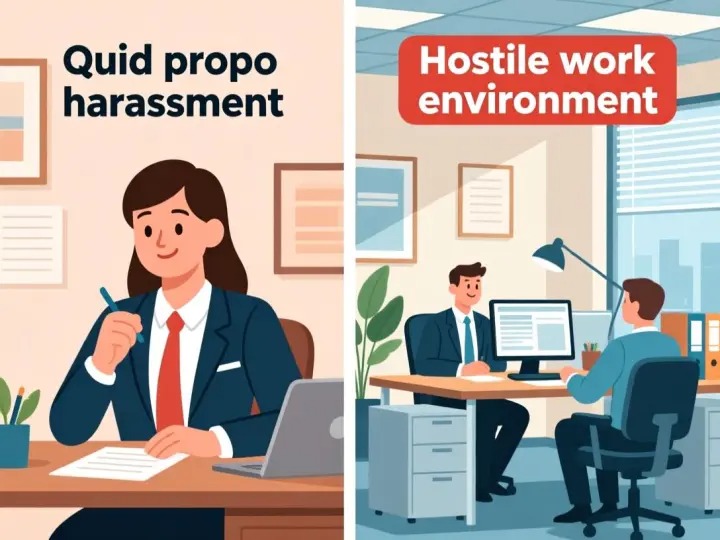
There are typically two forms of sexual harassment outlined in US labor law:
- Quid pro quo harassment: An authority figure who insists on sexual favors or behavior in exchange for a work benefit (e.g., promotion, not being terminated, preferred shifts).
- Hostile work environment harassment: When conduct becomes regular or serious enough to make a hostile, abusive, or offensive environment, if a bald-faced demand for sexual favors doesn’t occur.
Sexual harassment is a felony in most jurisdictions and municipalities and a felony under Title VII of the Civil Rights Act of 1964. It’s not exclusive to women; men, non-gender individuals, and anyone in between may be harassed. Harassment is also a felony if the harasser is a manager, co-employee, or even a contractor or customer. Who Can File a Sexual Harassment Claim?

Understanding who can file is relevant because not every person possesses legal standing.
- Employees: You are a worker of an employer (full-time, part-time), and you are harassed in the workplace.
- A job applicant: Inthe event of harassment in the selection process.
- Contract workers, interns, volunteers: Varies, normally according to a state’s law or employer’s rules.
- Students: Harassment within universities/schools falls within Title IX or comparable state laws.
- Former employees: If harassment happened while you worked and you didn’t file earlier, sometimes you can still file within the legal deadline.
And there are anti- retaliation laws: An employer should not retaliate (punish, discharge, demote, reduce hours, etc.) an individual for reporting harassment or for cooperating during an investigation.
Legal Requirements for Filing a Sexual Harassment Claim
To make a strong sexual harassment claim, there are certain legal requirements you need to satisfy. This helps decide whether your claim is valid under the law.
- Employment relationship and covered employer
- Federal law (Title VII) embraces employers who employ 15 or more employees, including private employers, public employers, and state employers.
- State laws may be enforced on smaller employers.
- Type of Harassment & Severity/F
- A hostile work environment or quid pro quo must be established.
- As a hostile environment, behavior must be harsh or frequent enough that a reasonable person would find the workplace intimidating, hostile, or abusive.
- Protected characteristic
- Harassment on the grounds of sex (gender), sexual orientation, and gender identity is included.
- Also, race, religion, et al. might intersect sometimes.
- Reporting internally (if necessary
- Some employers have complaint procedures: HR, supervisor, or a specific complaint officer.
- Reporting internally early makes a difference. Get it in writing.
- Defending an EEOC or a state-agency case first
- You typically must file a “charge” with the EEOC (Equal Employment Opportunity Commission) to pursue federal claims.
- States also have a separate anti-discrimination/fair employment agency—their office may be worthwhile or necessary to file with.
- Evidence of harm or adverse action
- You’ll require evidence of the harassment being conducted, of it having an impact on you (causing emotional, financial, or workplace damages), and of your employer’s recognition or should-have-known and did-not-act to end it.
Evidence Required for a Lawsuit for Sexual Harassment
Evidence collection is a critical part of a case. A case without adequate evidence might lose or recoveries might be negligible. Evidence can be:
- Incidents reported: date, time, place, what was said or what was done.
- Emails/messages/messages between you and the harasser or others.
- Witnesses: coworkers or people who have witnessed or heard about harassment.
- Performance records or documentation of any changes following reporting or following the onset of harassment (if impacted work status).
- HR reports: your reports to HR, your employer’s responses.
- Med or psychological records: treatment, if harassment induced anxiety, stress, depression, etc.
- Photos/videos: if there were physical altercations or improprieties recorded.

Statute of Limitations on Legal Proceedings
There are narrow time limits. You can lose your right to pursue a case if you miss them.
- You should also file a complaint with the EEOC under Title VII within 180 days after the harassment date.
- If your office of local government has a comparable anti-discrimination law, its deadline could be up to 300 days.
- State laws often provide longer filing times for state claims. For example, California has 3 years for filed complaint with its agency.
- You have 90 days after EEOC completes its investigation (or after it issues a “Right to Sue” letter) to file a case in court.
Steps to File a Sexual Harassment Claim
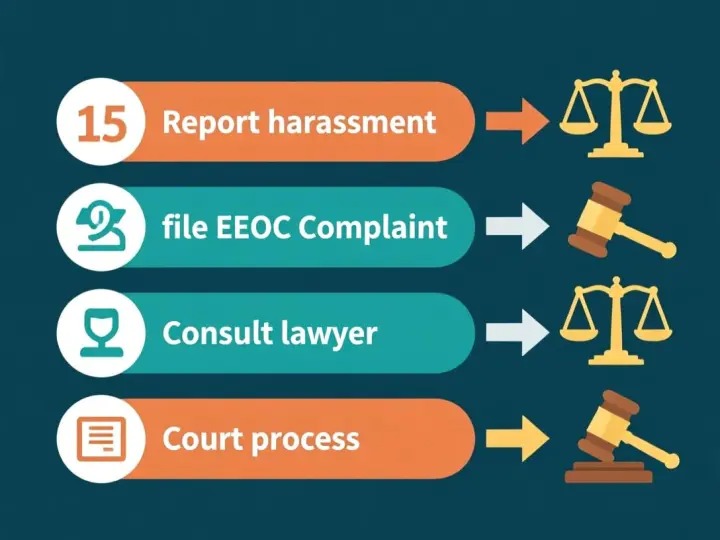
There is a step-by-step plan to follow. Just to be sure, keep good records and discuss it with a lawyer if you are able.
How to Start a Sexual Harassment Claim
- Identify and record what occurred
- Write down everything, with date, time, what was said or done, who was involved, and names of witnesses.
- Save texts, emails, messages, and voicemails.
- Report to the employer or institution internally
- Using company procedure: HR department, manager, or anonymous hotline if there is one.
- Definitely do it in a written format if possible or email to say you verbally reported it.
- Print a copy of your report
- Make copies of your grievance, employer’s responses, and notes of meetings.
- If the employer delays or ignores, document that too.
- Reach out to an asexual harassment lawyer or legal assistance program
- A free initial consultation is offered by most.
- They are able to assist in clarifying your rights, collecting evidence, and informing your strategy.
Filing with EEOC or State Agency
- Report a charge to the EEOC
- This is a condition for any federal claim.
- You complete a “charge of discrimination” questionnaire.
- Or your state’s anti-discrimination office, if it has one
- Both are required by some states, or filing the state safeguards your rights under your state law.
- Wait for the investigation
- The agency will review your charge, may request more information, make company investigation.
- This can take a few months.
- Right to Sue Letter
- If EEOC or a state agency decides you can proceed or cannot resolve, they issue a letter letting you sue in court.
Lawsuit Filing (when necessary)
- Prepare lawsuit documents
- You will have your lawyer pen a complaint, mentioning the parties, what happened, the legal foundation, and damages.
- After a physical accident
- You bring the case to federal or state court once you have rights to sue.
- Discovery process
- Both sides also present evidence: depositions, paperwork, and witness testimonies.
- Settlement negotiation
- All too often, there are settlement offerings before, during, or after discovery.
- Trial
- No settlement, trial on the case with a judge or jury hearing evidence.
The Sexual Harassment Claim Settlement Process
- Settlements are extremely frequent: most cases settle without a full trial.
- Typically, after an investigation, the insurer or employer makes a settlement offer. This is a promise: money in return for settling the claim (you not to sue).
- You and your lawyer discuss whether settling is justified (damages, costs, trial risk).
- If agreed, you execute a settlement agreement. It will be for an amount to be paid within what time period, and typically, your promise not to pursue the claim or sue any further.
- You are thus reimbursed, from which legal fees or attorney fees are first subtracted.
Cost of Filing a Sexual Harassment Claim
- Contingent fees are employed by a majority of lawyers: You pay on a settlement or winning basis alone; the percentage for the lawyer is normally 30-40%.
- Otherwise, you are still responsible for court filing fees, document preparation fees, expert witness fees, travel, and so on.
- State/federal agencies won’t usually charge you to file a charge. You may be charged for bringing documents to copy.
Sexual Harassment Claim Damages
What types of damages would a successful claim entitle you to?
- Economic damages
- Missing past pay due to harassment (in case you were pushed off the job, downgraded, or sent on leave).
- future lost income (if your capacity to work deteriorates).
- Medical costs (treatment, counseling, mental or physical effects healthcare).
- Non-economic damages
- Pain, distress, emotional distress (fear, anxiety)
- Anticipation of loss of life.
- Punitive damages
- Courts often send an additional amount of money to penalize the offender, particularly if the actions were intentional or extremely negligent.
- Other damages
- Court fees and lawyers’ fees.
- Maybe back pay (if you were forced out or demoted).
- On occasion, reinstatement or alteration of job status.
Statute of Limitations for Sex Harassment Claim (Timelines)
This repeats somewhat what was earlier, but is more focused on claim timeframes
- For EEOC federal claims, 180 days following the date of the harassment event. It is dependent on your local or state law and can be 300 days.
- You generally have 90 days from the date of receipt of “Right to Sue” from EEOC or a state agency to file in court.
- State laws vary:
- California: A 3-year time period to file with the
- state law claim.New York: 3 years under human rights state law; likewise for city departments of human rights.
- Other states may be longer or shorter.
Conclusion
You don’t have to tolerate your right to be free from sexual harassment. If it does occur to you, there are remedies in US law to hold it to account and to get redress. It may seem scary to do so, but being clear about your rights, documenting your evidence, and following it through quickly can be a lifesaver.
Major Points:
- When does sexual harassment happen (quid pro quo, hostile environment).
- Be on record from the beginning: notes, messages, witnesses.
- Report internally as outlined in policy, with evidence.
- Charge EEOC or a state agency within the time constraint.
- Consider hiring a good lawyer.
- Be prepared to negotiate or possibly go to court.
- These damages are for economic loss, emotional distress, and occasionally punitive amounts.
These are for financial loss, distress, and punitive damages for special cases. Act now the statute of limitations does not forgive. If you are being harassed, call your attorney or legal aid for information about your case and your state. You are not alone, and you do have rights.
Frequently Asked Questions (FAQs)
A. There are an enormous number of laws that can be applied to workplaces or classrooms. Harassment of a different type would place you in a different legal category (e.g. assault, defamation) but perhaps not within EEOC or Title VII.
A: Yes, if you file within deadlines and you still have the prerequisites (such as you had filed an EEOC charge within deadlines, etc.).
A: Retaliation is prohibited. If you are fired, demoted, or disciplined for reporting harassment, you can have a distinct claim for retaliation under statutes such as Title VII.
A: It’s possible to file a charge on your own, but it’s extremely helpful to have a lawyer. Lawyers assist in gathering evidence, understanding legal rules, settling cases, and potentially enhance outcome.
A: Varies. Straightforward cases resolve within months. With there being an investigation, negotiation, and perhaps a trial, a year or two. In others, far longer.